Visual alphabet
When starting with visual facilitation, it is useful to develop your drawing skills. Visual alphabet is a set of simple shapes which we use, when we are learning to draw. It’s one of the first steps we can take. It helps us make the process of drawing easier. As letters are one of the basics for writing, these shapes are the basis for doodling. It was first introduced by Dave Gray who is one of the early pioneers of the modern visual thinking movement. The basic alphabet consist of 5 shapes: dot, line, triangle, square and circle. The extended version can include: angle, arch, spiral, loop, house, blob, eye, star and moon.
Visual vocabulary
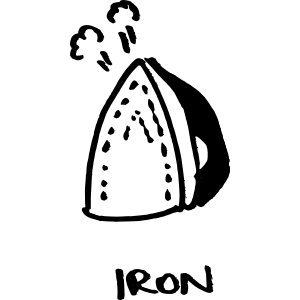
Once you know how to write, you also know how to draw. Just grab a pencil and start creating your visual vocabulary. By using straight and curved lines you can create any easily recognisable mark to represent anything you need. From simple objects, animals and feelings to more complex ideas. We suggest to practice and try to create your own visual vocabulary or gather good ideas from other visual facilitators.
Used for: making notes at school and explaining your thoughts to others. Having your own visual vocabulary makes visual facilitation easy and fast.
Link: Verbal to Visual